Is Your Work From Home Ergonomics Setup Killing Your Productivity?
The High Cost of a Poor Home Office Setup
Most men transition to remote work thinking they can conquer the world from a kitchen stool or a soft sofa. Within weeks, the reality of lower back pain, neck strain, and repetitive stress injuries sets in. A professional work from home ergonomics setup isn’t a luxury; it is a fundamental requirement for any man serious about his career longevity and physical health. Ignoring the mechanics of how he sits and moves during the day leads to a steady decline in focus and a sharp increase in medical bills.
The Foundation: Investing in an Ergonomic Chair
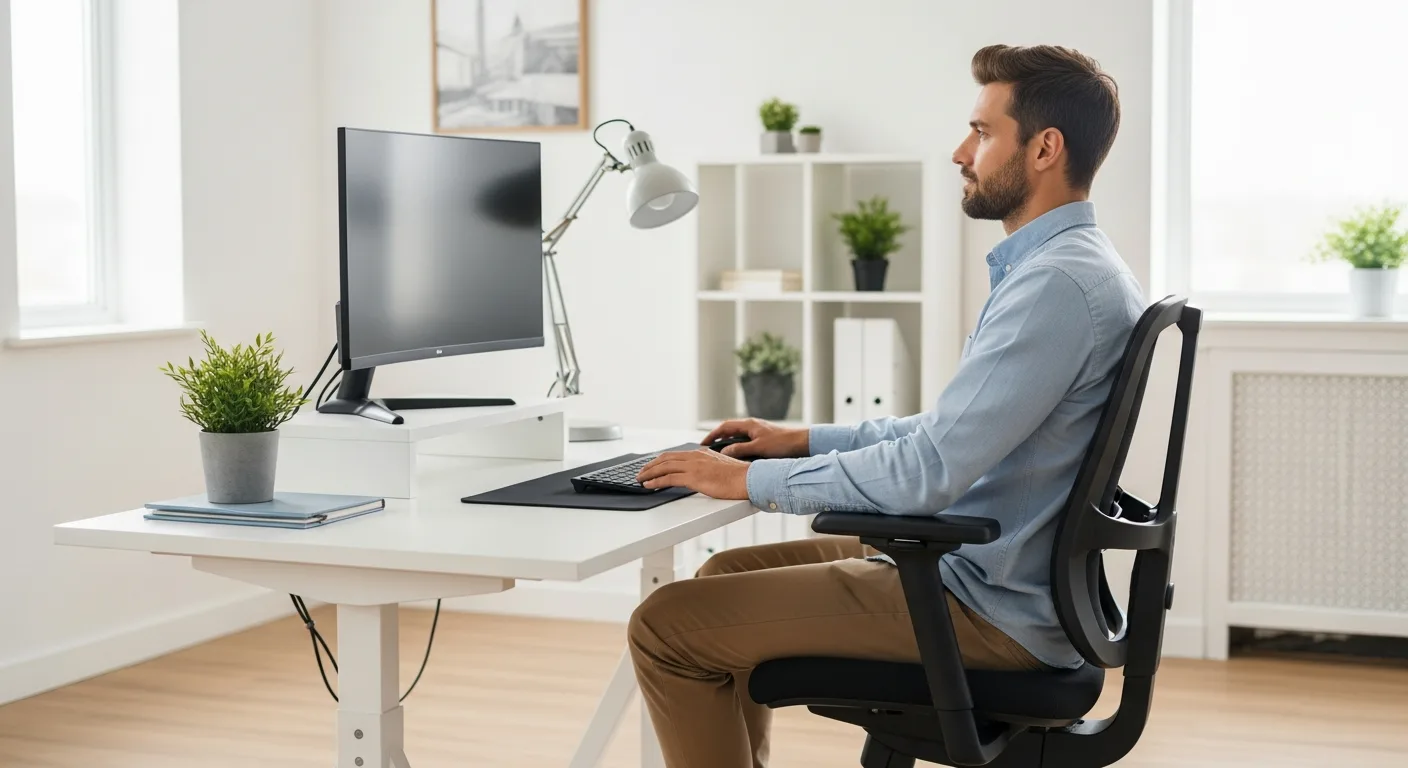
The chair is the most critical component of a workspace. A standard dining chair offers zero lumbar support, forcing the spine into an unnatural ‘C’ shape. A high-quality ergonomic chair should support the natural ‘S’ curve of his spine. He needs to look for adjustable armrests, seat depth, and a tilt mechanism that allows for micro-movements throughout the day.
- Lumbar Support: It must be adjustable to fit the small of his back.
- Seat Height: His feet should rest flat on the floor with his knees at a 90-degree angle.
- Breathability: Mesh materials help regulate body temperature during long sessions.
Optimizing Desk Height and Monitor Alignment
Neck pain usually stems from a monitor that is too low, causing a man to hunch forward. The top third of the screen should be at eye level. If he uses a laptop, a dedicated stand and an external keyboard are non-negotiable. When he explores various home office desk ideas, he should prioritize surface area and height adjustability to ensure his forearms remain parallel to the floor while typing.
A standing desk is an excellent addition to a work from home ergonomics setup. It allows him to alternate between sitting and standing, which improves circulation and keeps his metabolic rate higher. However, even with a standing desk, he must maintain proper form—shoulders relaxed, elbows at 90 degrees, and wrists in a neutral position.
Lighting and Visual Health
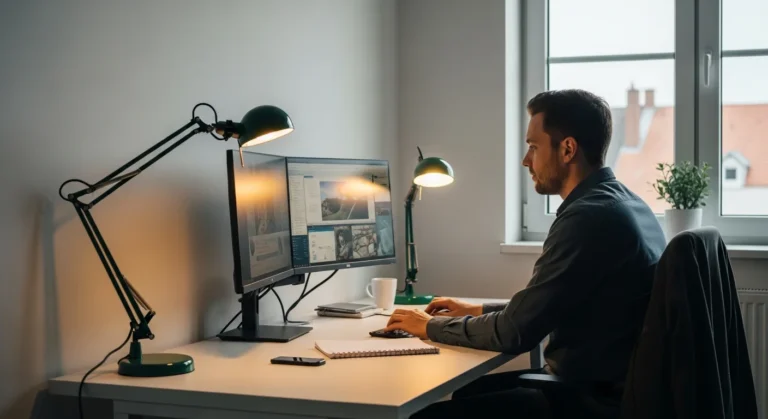
Eye strain is a silent productivity killer. If the room is too dark or the screen is too bright, his eyes work overtime to compensate. Proper illumination is just as vital as physical posture, and a comprehensive home office lighting guide can help him reduce eye fatigue by balancing ambient light with task lighting. He should position his desk perpendicular to windows to avoid glare on the screen, which often leads to squinting and forward-leaning—both of which ruin his posture.
The 20-20-20 Rule and Movement
No matter how perfect his work from home ergonomics setup is, the human body was not designed to be stationary for eight hours. He must implement the 20-20-20 rule: every 20 minutes, he should look at something 20 feet away for at least 20 seconds. This simple habit resets his eye focus and prevents digital eye strain.
Furthermore, he should incorporate “movement snacks” into his routine. A quick stretch or a three-minute walk around his house every hour keeps his joints lubricated and his mind sharp. Ergonomics is as much about how he moves as it is about how he sits.
Essential Peripheral Upgrades
Standard mice and keyboards often force the wrists into awkward angles. An ergonomic vertical mouse allows his hand to rest in a natural “handshake” position, reducing the risk of carpal tunnel syndrome. Similarly, a split keyboard allows his shoulders to remain open rather than hunched inward. These small investments pay massive dividends in comfort and output over a 20-year career.
Frequently Asked Questions
What is the 90-90-90 rule in ergonomics?
This rule suggests that a man should keep his elbows, hips, and knees all at 90-degree angles while seated to minimize joint stress and maximize blood flow.
How high should my monitor be?
The top of the monitor screen should be at or slightly below eye level. This ensures he is looking slightly downward without tilting his head forward.
Are standing desks actually better for your back?
They are beneficial because they encourage movement and prevent the spine from remaining in a compressed seated position for too long. However, he should still sit for portions of the day to avoid leg fatigue.
Do I need a footrest for my home office?
If his desk is too high and his feet cannot reach the floor comfortably while maintaining the 90-90-90 rule, a footrest is essential to prevent pressure on the back of his thighs.