Why Your Home Office Lighting is Killing Your Productivity (and How to Fix It)
The Science of Focus: Why Lighting Matters
Bad lighting is more than just a nuisance; it is a direct drain on a man’s cognitive energy. When he works in a dimly lit room or under the harsh flicker of outdated fluorescents, his brain works overtime to process visual information. This leads to digital eye strain, headaches, and a noticeable slump in afternoon productivity. To maintain a high level of output, he must treat his lighting setup with the same importance as his hardware.
The Three-Layer Rule for a Professional Workspace
A single overhead light is never enough for a high-performance environment. A professional setup requires three distinct layers of light to create depth and reduce shadows:
- Ambient Lighting: This is the base layer, usually provided by ceiling fixtures or recessed lights. It should fill the room evenly without creating harsh glares on the monitor.
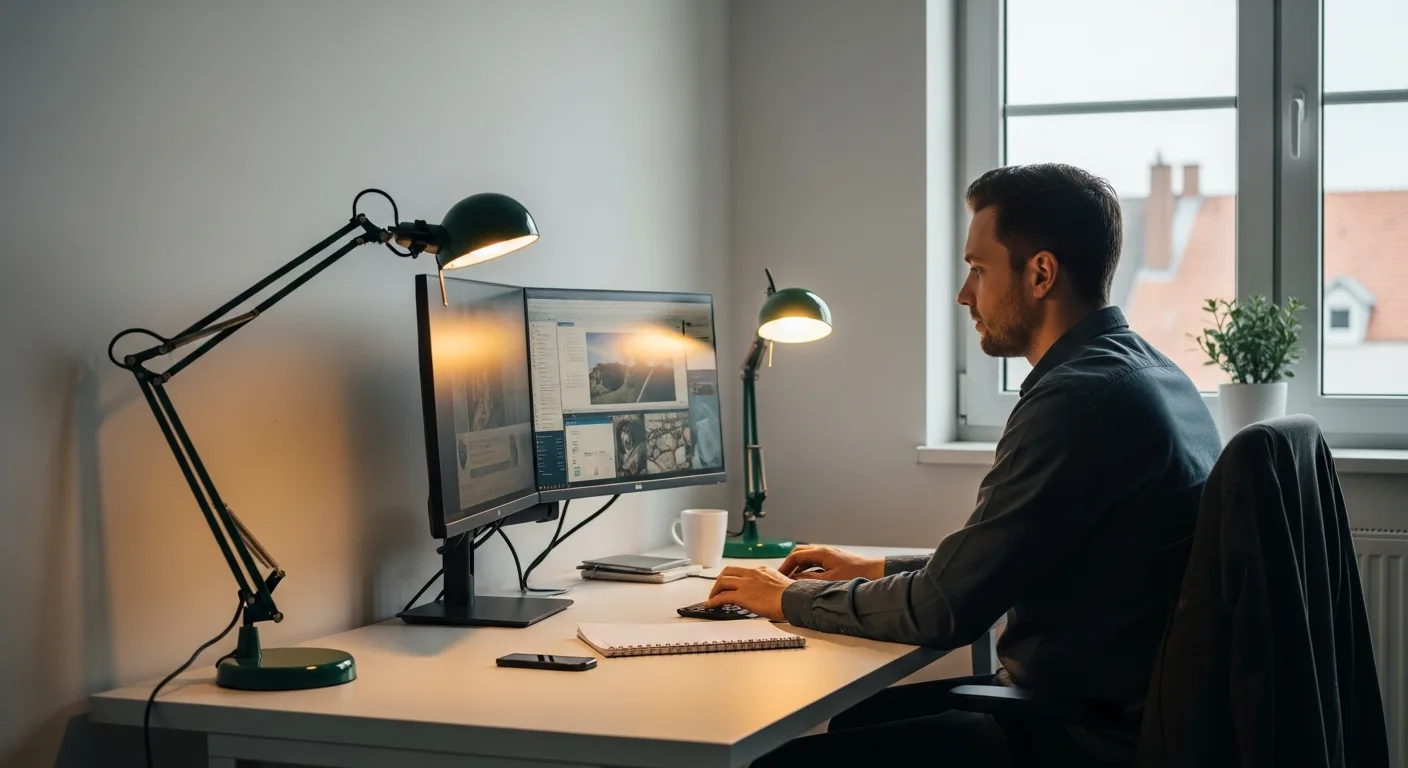
- Task Lighting: This is focused light for specific activities. A high-quality desk lamp with an adjustable arm allows him to direct light exactly where he needs it, whether he is reviewing a physical contract or taking notes.
- Accent Lighting: This adds character and reduces the contrast between a bright screen and a dark wall. LED strips behind the desk or a floor lamp in the corner can make the space feel more expansive.
Positioning Your Desk for Maximum Natural Light
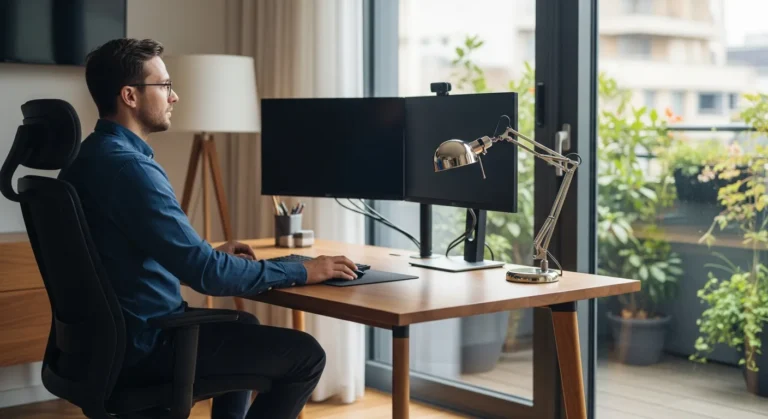
Natural light is the ultimate mood booster, but it can be a double-edged sword if positioned incorrectly. If he places his desk directly in front of a window, the brightness can cause significant eye fatigue. Conversely, placing the window directly behind him creates a reflection on the screen that makes work impossible.
The ideal setup is to place the desk perpendicular to the window. This allows him to enjoy the benefits of daylight while minimizing glare. When considering different home office desk ideas, he should always prioritize the proximity to natural light sources to keep his circadian rhythm in check.
Color Temperature: Finding the Sweet Spot
Light color is measured in Kelvins (K), and choosing the wrong temperature can ruin a man’s focus. For a workspace, he should aim for a cool white light between 4000K and 5000K. This range mimics daylight and keeps the brain alert and engaged.
Warm light (2700K – 3000K) is excellent for a living room or bedroom, but in an office, it can make him feel sluggish. In 2026, many professionals are opting for tunable LED bulbs that transition from cool blue tones in the morning to warmer amber tones in the evening, helping him wind down after a long day of deep work.
Reducing Digital Eye Strain and Glare
Glare is the silent enemy of productivity. It occurs when light reflects off the computer screen or polished desk surfaces, forcing the eyes to constantly readjust. To combat this, he should look for lamps with asymmetric optics that cast light across the desk rather than directly onto the screen.
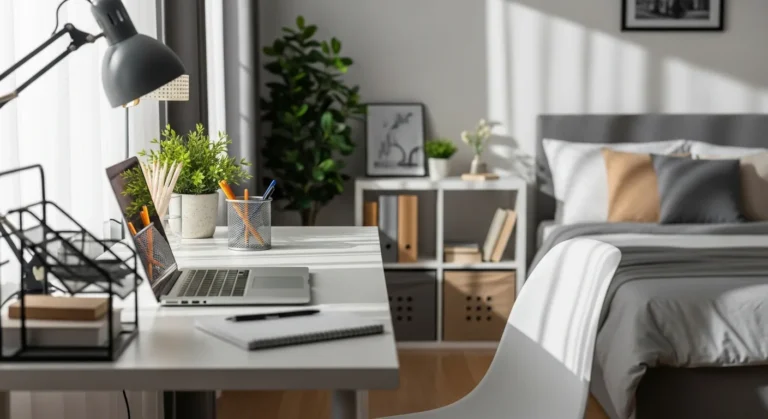
If he is working in a smaller area, such as those found in many bedroom office ideas, he must be even more intentional. Using a monitor light bar is a space-saving way to illuminate the keyboard area without taking up valuable real estate or causing screen reflections.
Smart Lighting Innovations in 2026
The current year has brought significant advancements in smart office technology. Modern systems now use AI-driven sensors to detect the amount of natural light entering the room and automatically dim or brighten the artificial lights to maintain a consistent level of illumination. He no longer needs to manually adjust his settings as the sun moves; the office adapts to him, ensuring his environment is always optimized for peak performance.
Frequently Asked Questions
What is the best light color for a home office?
A cool white light between 4000K and 5000K is ideal for productivity. It mimics natural daylight, which helps keep the brain alert and reduces the production of melatonin during work hours.
How can I stop glare on my computer screen?
Position your desk perpendicular to windows and avoid placing bright lamps directly behind your seating position. Using a matte screen protector or a monitor light bar can also significantly reduce reflections.
Is natural light better than artificial light for working?
Yes, natural light improves mood and energy levels. However, it must be managed with blinds or proper desk positioning to avoid glare and heat buildup throughout the day.
Do I really need a desk lamp if I have ceiling lights?
Yes. Ceiling lights often create shadows over your workspace. A dedicated task lamp provides focused illumination for reading and writing, reducing the strain on your eyes.