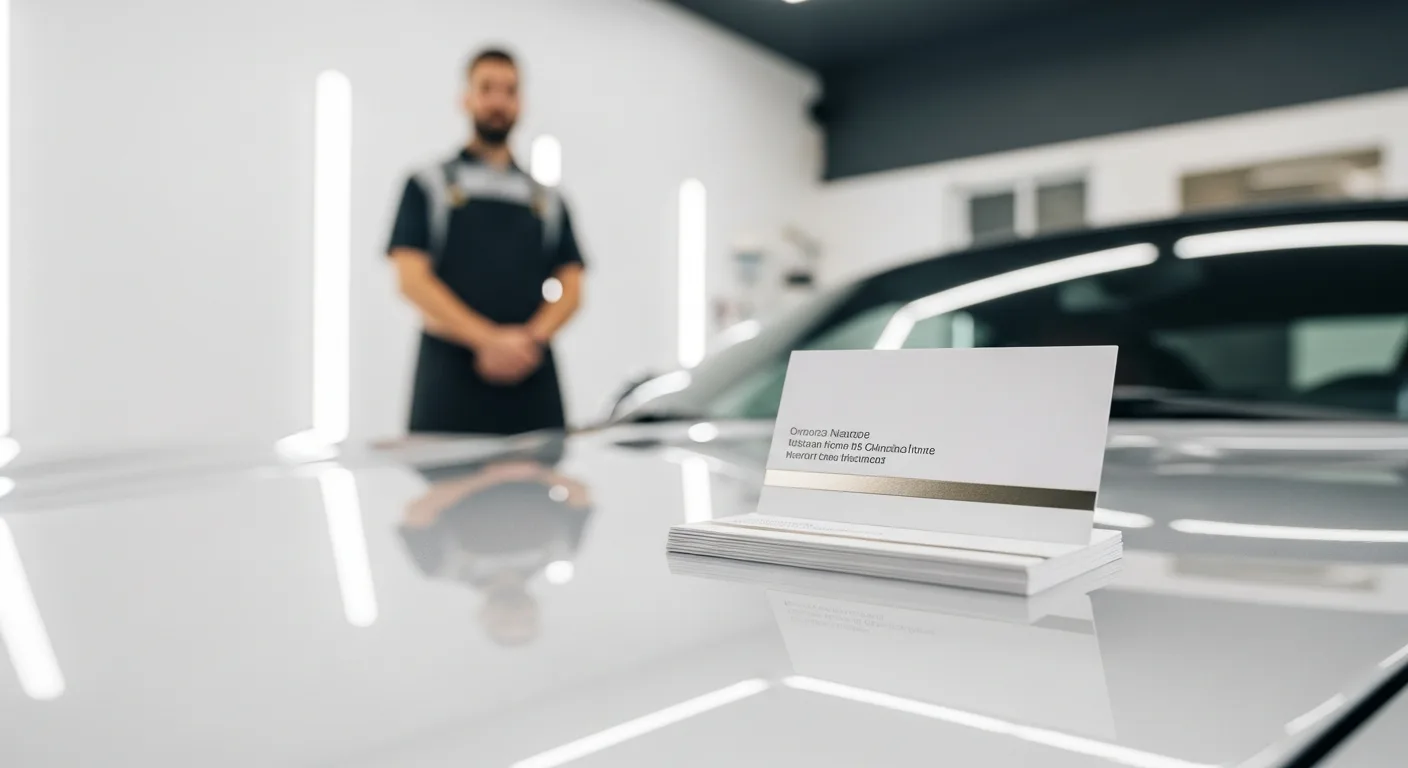
How Can Car Detailing Business Cards Drive More High-End Clients?
Why Your Car Detailing Business Cards Are Your Best Salesman
In the high-stakes world of automotive care, a detailer is often judged by his attention to detail before he even touches a vehicle. When a professional meets a potential client at a car show or a local meetup, he has only seconds to establish trust. His business card serves as a physical representation of the precision and quality he brings to his craft. In 2026, where digital noise is at an all-time high, a tactile, premium business card remains the most effective tool for closing deals on the spot.
A well-executed card does more than provide contact information; it communicates a brand’s identity. For a man building his reputation in the ceramic coating or paint correction niche, the card must feel as high-end as the services he provides. If he hands out a flimsy, poorly designed card, the client will naturally assume his work on their luxury vehicle will be equally lackluster.
Essential Elements for a High-Converting Detailing Card
To ensure a card actually generates leads, it must balance aesthetics with functional information. A detailer should prioritize clarity and professional branding over cluttered graphics. Here are the non-negotiables for a modern detailing card:
- Service Specialization: Clearly state if he focuses on interior restoration, ceramic coatings, or mobile fleet detailing.
- High-Resolution Logo: The logo should be crisp and reflect a modern, masculine aesthetic.
- Direct Contact Info: Include a phone number and a professional email address.
- Call to Action (CTA): A simple “Book Your Inspection Today” can significantly increase conversion rates.
Beyond the basics, integrating technology is vital. By 2026, most successful detailers are using QR codes that lead directly to their booking software or a gallery of their best work. This allows a potential customer to see the results he can achieve before they even finish their conversation.
Choosing Materials That Reflect Quality
The weight and texture of the cardstock are just as important as the design. For a professional detailer, choosing a 16pt or 18pt matte finish provides a sophisticated, modern feel. Many industry leaders are now opting for waterproof plastic cards. This is a brilliant strategic move; it subtly suggests that his services are durable and resistant to the elements, much like the coatings he applies to cars.
Adding a spot UV finish to the logo or the image of a polished car can create a 3D effect that mimics the gloss of a fresh wax job. When he hands this card to a luxury car owner, the tactile experience reinforces the idea that he is an expert who values premium results. This level of branding is a key component of maintaining a sharp professional image that separates a hobbyist from a serious entrepreneur.
Strategic Distribution: Where to Leave Your Mark
A card only has value if it reaches the right hands. A smart detailer doesn’t just hand them out randomly; he targets locations where high-net-worth individuals spend their time. Local car meets, luxury dealerships, and high-end tint shops are prime locations for networking. He should establish relationships with local mechanics who don’t offer detailing, creating a referral loop that benefits both parties.
Furthermore, every completed job should include a card left on the driver’s seat or attached to the invoice. To maximize customer lifetime value, he might consider implementing strategic follow-up gestures like business thank you cards for retention. This extra step ensures that when the client needs his next maintenance wash, he knows exactly who to call.
Frequently Asked Questions
What should be on the back of a car detailing business card?
The back of the card is prime real estate. Use it for a simplified price list, a referral discount code, or a QR code that links to your Instagram portfolio. This keeps the front clean and focused on your brand.
Is a glossy or matte finish better for detailing cards?
Matte is generally preferred for a high-end, professional look as it is easier to read under various lighting conditions. However, using spot UV (a glossy overlay) on specific elements like your logo can create a striking contrast that mimics a car’s paint.
How many cards should I order as a new detailer?
Starting with 250 to 500 cards is usually sufficient. This allows you to test your design and contact information without overcommitting, in case you decide to update your service offerings as your business grows.
Should I include my prices on my business card?
It is generally better to avoid listing specific prices, as your rates may change or require custom quotes based on the vehicle’s condition. Instead, list your primary services and use a CTA to encourage a quote request.