Which Wearable Tech Startup Ideas Will Dominate in 2026?
The Evolution of the Wearable Market
The days of simple step counters are long gone. In 2026, the wearable industry has pivoted from basic activity tracking to deep biological insights and industrial utility. For an entrepreneur looking to break into this space, the opportunity lies in solving specific, high-stakes problems rather than creating another generic smartwatch. He must focus on specialized hardware that integrates seamlessly into a man’s daily routine or professional life.
Success in this sector requires more than just a sleek design; it demands a robust ecosystem of data and actionable feedback. As the demand for specialized hardware grows, many entrepreneurs are looking toward the health-tech jobs career guide to understand the talent landscape required to build these complex devices and the software that powers them.
1. Industrial Safety and Exoskeleton Integration
Blue-collar industries are ripe for disruption. Wearable tech in 2026 isn’t just for the gym; it is for the warehouse and the construction site. Startups are now developing smart haptic vests that alert a worker when he is lifting with poor form or when a forklift is approaching his blind spot.
- Fatigue Monitoring: Sensors that track heart rate variability and perspiration to alert a supervisor when a worker needs a break.
- Power-Assist Wearables: Lightweight, soft exoskeletons that reduce strain on a man’s lower back during repetitive tasks.
- Environmental Sensors: Devices that detect toxic gas or extreme heat levels in real-time.
2. Metabolic Health and Continuous Monitoring
Bio-hacking has moved from the fringe to the mainstream. Men are increasingly obsessed with how their diet affects their performance. A startup focusing on Continuous Glucose Monitors (CGM) for non-diabetics can provide a man with real-time data on how his lunch affects his afternoon focus.
The next step in this niche is the integration of multiple biomarkers. Imagine a wearable that tracks glucose, cortisol, and lactate levels simultaneously. This allows a high-performer to optimize his training and recovery with surgical precision, ensuring he never hits a wall during his workday or his workout.
3. Spatial Computing and AR Workwear
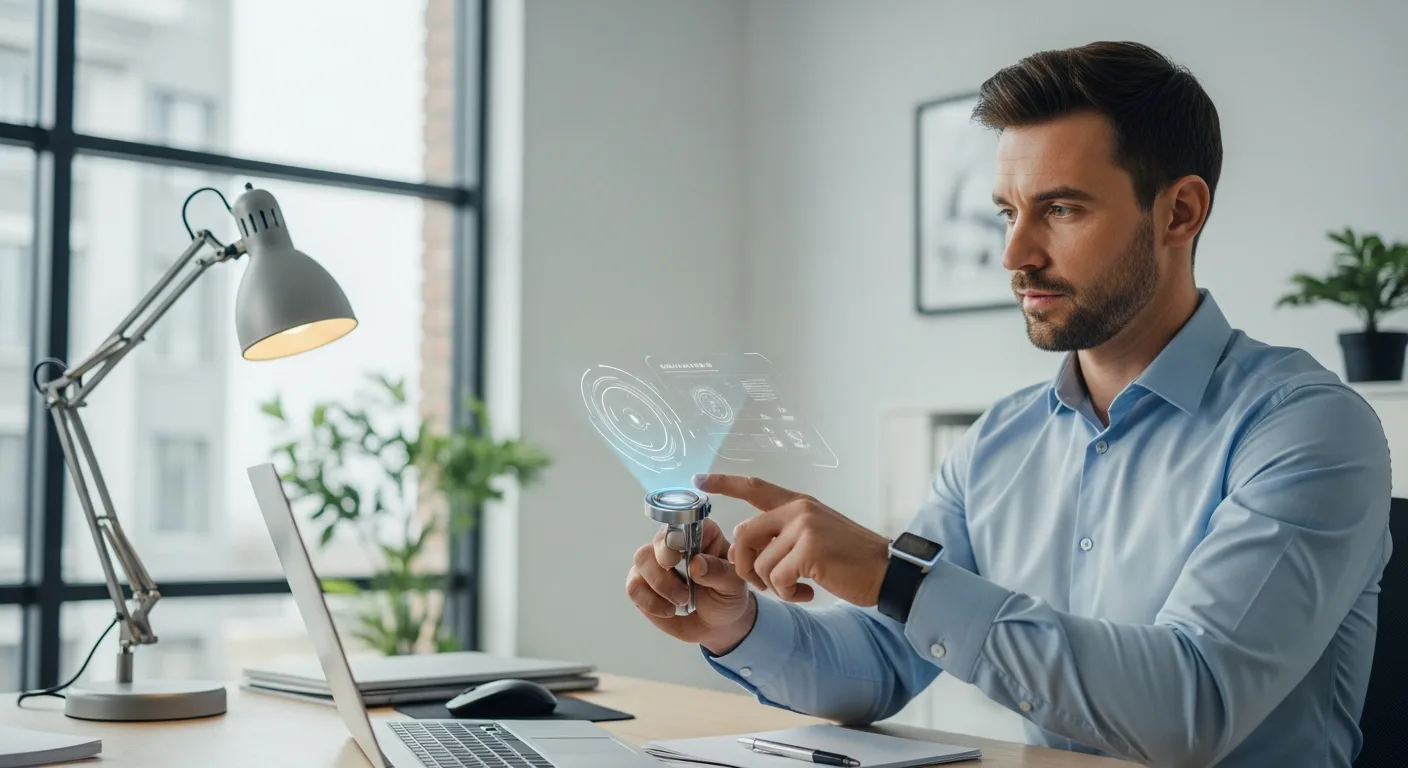
The convergence of hardware and software is most evident in the rise of spatial computing business opportunities, where wearable glasses replace traditional screens. For the startup founder, the goal is to create lightweight Augmented Reality (AR) glasses that provide a heads-up display for field technicians.
Instead of a mechanic looking back and forth at a manual, his glasses overlay 3D instructions directly onto the engine he is repairing. This hands-free approach increases efficiency and reduces the margin for error in technical trades.
4. Neuro-Wearables for Cognitive Enhancement
In an era of constant distraction, focus is a competitive advantage. Wearables that utilize EEG (Electroencephalography) to monitor brain activity are gaining traction. A startup could develop a headband that detects when a man’s focus is drifting and uses subtle auditory cues to bring him back into a flow state.
These devices aren’t just about tracking; they are about training. By providing real-time feedback on his mental state, the user learns how to trigger deep work sessions on command. This is a high-value proposition for executives and creative professionals who need to maximize their output.
5. Smart Fabrics and Invisible Tech
The most successful wearable might be the one you can’t see. Smart textiles involve weaving sensors directly into the fabric of a suit or athletic gear. This eliminates the need for bulky wristbands or chest straps.
A startup in this space could focus on professional attire that monitors posture and stress levels throughout the day. If a man begins to slouch or his heart rate spikes during a presentation, a subtle vibration in his collar reminds him to adjust his stance and breathe. It is about discreet assistance that enhances his presence without being a distraction.
Frequently Asked Questions
What is the biggest challenge for wearable tech startups?
Battery life and data privacy remain the primary hurdles. A founder must ensure his device can last at least a full day on a single charge while maintaining the highest standards of encryption for the sensitive biological data he collects.
Is the wearable market too saturated for new players?
While the general fitness tracker market is crowded, niche applications in medical, industrial, and high-performance sectors are still wide open. Success comes from dominating a specific use case rather than trying to compete with tech giants on a general-purpose device.
How do I fund a wearable tech startup?
Hardware is capital-intensive. Most founders start with a functional prototype to secure seed funding or launch a crowdfunding campaign to prove market demand before moving into full-scale manufacturing.