How to Select Business Class Seats That Maximize Professional Productivity
Defining the Modern Business Class Seat Experience
For the modern executive, the journey is often as critical as the destination. Choosing the right business class seats is no longer just about a wider cushion or a glass of champagne; it is about securing a mobile office environment that facilitates deep work and restorative rest. As global travel reaches new heights in 2026, the distinction between various cabin configurations has become more pronounced, requiring a discerning eye to identify the best value for his time and investment.
The primary goal for any professional traveler is to arrive at his destination without the debilitating effects of jet lag. A well-designed seat provides the ergonomic support he needs to maintain his focus during a long-haul flight. Whether he is preparing a presentation or reviewing a contract, the physical environment of the cabin plays a pivotal role in his output.
The Evolution of Seat Configurations: Privacy and Access
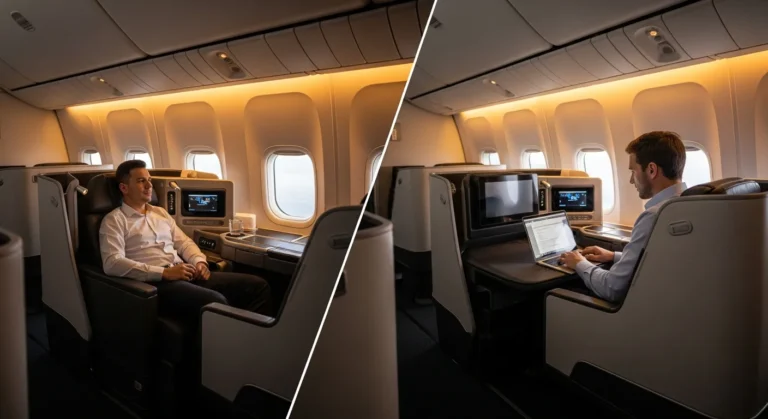
In the current landscape of premium air travel, the layout of the cabin is the first thing a traveler should scrutinize. The industry has shifted heavily toward the 1-2-1 configuration, which ensures that every passenger has direct aisle access. This is essential for the busy professional who does not want to disturb his neighbor or be disturbed when he needs to stretch his legs or access the lavatory.
Fully Flat Beds vs. Angled Lie-Flats
While most major carriers have phased out angled seats, some regional routes still utilize them. For a long-haul journey, a fully flat bed is non-negotiable. He must ensure his seat extends to a full 180 degrees, allowing him to achieve a sleep quality comparable to a hotel stay. This physical recovery is what allows him to jump straight into high-stakes meetings upon landing, a common requirement for those holding the best paying jobs in technology and global finance.
Privacy Suites and Sliding Doors
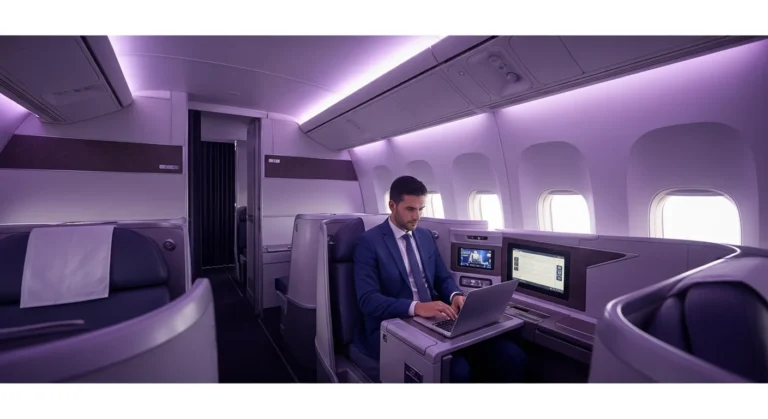
The latest trend in business class seats is the introduction of the “mini-suite.” These seats feature sliding doors that create a private sanctuary. For the man who deals with sensitive corporate data, this level of privacy is invaluable. It prevents prying eyes from seeing his laptop screen and provides a psychological barrier that helps him enter a state of flow.
Maximizing Your Workspace in the Air
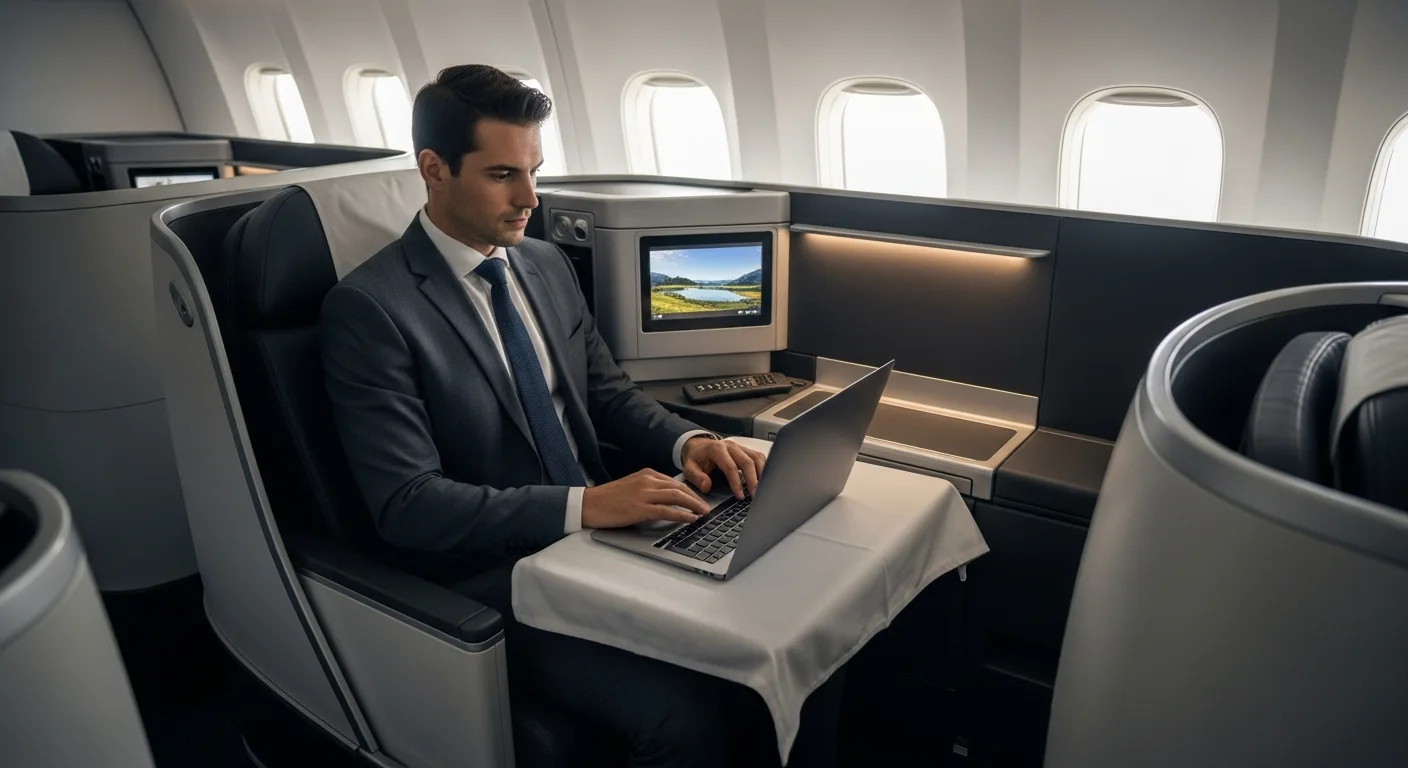
A business class seat must function as a high-efficiency workstation. This means looking beyond the seat itself and evaluating the surrounding amenities. Large, sturdy tray tables are a must, as they need to accommodate a laptop, a mouse, and perhaps a tablet simultaneously.
Connectivity is another pillar of the modern flight experience. High-speed satellite Wi-Fi is now standard on most premium routes, enabling the traveler to remain in constant contact with his team. In fact, the quality of the onboard desk space is now so high that he can easily manage a remote team using the best video conferencing small business platforms without any technical friction.
- Integrated Power Outlets: Look for seats that offer both universal AC power and multiple USB-C ports.
- Storage Compartments: A good seat will have dedicated space for his noise-canceling headphones, passport, and charging cables.
- Adjustable Lighting: Dimmable reading lights allow him to customize his environment based on the task at hand.
Strategic Seat Selection: Where to Sit for a Quiet Flight
Even the best business class seats can be compromised by poor placement within the cabin. To ensure a quiet environment, he should avoid seats located near the galleys or lavatories, where foot traffic and noise are most frequent. The “sweet spot” is typically in the middle of the cabin, away from the engine noise and the light from the kitchen areas.
Furthermore, he should check SeatGuru or similar 2026 flight tracking tools to see if his specific seat has a missing window. While it might seem minor, natural light helps regulate his circadian rhythm, making it easier for him to adjust to a new time zone. A well-placed seat ensures he can control his exposure to light, further enhancing his productivity.
Why Premium Seating Impacts Business Performance
Investing in a business class seat is an investment in the business itself. When a leader travels in comfort, he is protecting his most valuable asset: his cognitive function. The ability to sleep horizontally and work in a quiet, private space means he arrives sharp, energized, and ready to lead his organization through complex challenges.
Frequently Asked Questions
What is the most important feature of a business class seat?
For most travelers, direct aisle access and a fully flat bed are the two most critical features. These ensure both comfort and the freedom to move around the cabin without restriction.
How can I tell if my flight has the new suite-style seats?
He can check the aircraft type and the seat map during the booking process. Look for 1-2-1 configurations on newer aircraft like the Airbus A350 or the Boeing 787 Dreamliner, as these are most likely to feature the latest suite designs.
Are business class seats worth the extra cost for daytime flights?
Yes, especially if he intends to work. The extra space, privacy, and dedicated power outlets make it much easier to remain productive compared to the cramped environment of a standard cabin.
Do all business class seats offer Wi-Fi?
While most do, the speed and reliability can vary. He should check the airline’s website beforehand to see if they offer high-speed streaming Wi-Fi, which is necessary for video calls and large file transfers.