How Can You Maximize Home Office Tax Deductions in 2026?
The Foundation of Home Office Tax Deductions in 2026
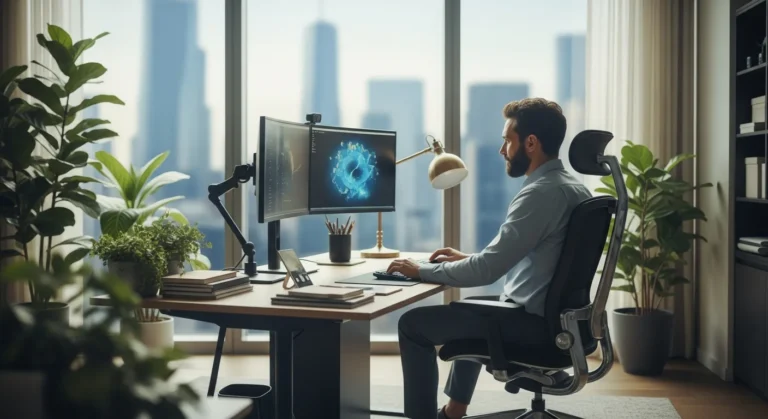
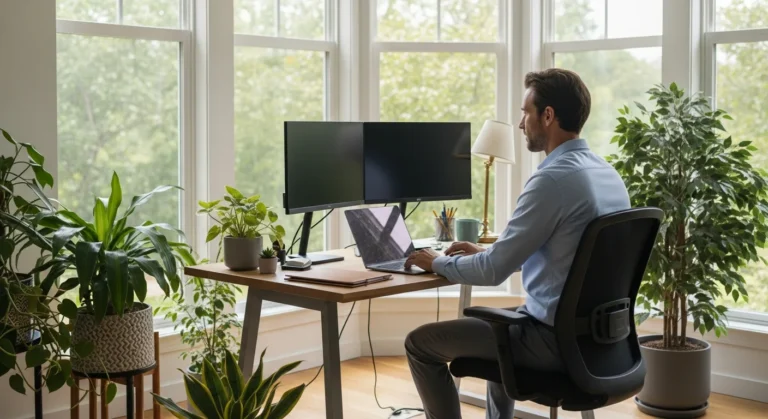
Every square foot of a man’s home office represents a potential tax break that many professionals leave on the table. As we navigate the 2026 tax year, the IRS continues to maintain strict but rewarding guidelines for those who work from their own property. To qualify, a man must ensure his workspace meets the exclusive use and principal place of business tests. This means the area cannot serve as a guest bedroom by night and an office by day; it must be a dedicated zone for his professional endeavors.
If he is running a startup or consulting firm, understanding these nuances is a core part of a successful home-based business strategy. The deduction isn’t just a perk; it is a legitimate way to lower his taxable income and reinvest those savings back into his growth.
Choosing Between the Simplified and Actual Expense Methods
When calculating his deduction, a man has two primary paths. The choice often depends on the size of his office and the total cost of his home’s upkeep.
- The Simplified Method: This is the path of least resistance. He can claim $5 per square foot of his home used for business, up to a maximum of 300 square feet. This results in a straightforward $1,500 deduction without the need to track every utility bill.
- The Actual Expense Method: This requires more paperwork but often yields a higher deduction. He calculates the percentage of his home used for business and applies that percentage to his mortgage interest, insurance, utilities, and repairs. If he lives in a high-cost area, this method usually puts more money back in his pocket.
Direct vs. Indirect Expenses: What Counts?
Understanding the difference between direct and indirect expenses is where a man can truly optimize his return. Direct expenses are costs incurred solely for the office space, such as painting the room or repairing a window within that specific area. These are 100% deductible.
Indirect expenses are costs for maintaining the entire home, such as electricity, water, and roof repairs. These are deductible based on the percentage of the home the office occupies. For example, if his office takes up 10% of his house, he can deduct 10% of his total heating bill. He should also consider his ergonomic workspace investments, as high-quality chairs and desks used exclusively for work are often depreciable assets or immediate write-offs under Section 179.
Depreciation: The Long-Term Tax Play
If a man owns his home, he can also claim depreciation on the portion used for business. This accounts for the wear and tear on the structure over time. While this provides an immediate tax benefit, he must remember that depreciation recapture may apply when he eventually sells the home. He should consult with a professional to ensure he isn’t creating a future tax liability that outweighs his current savings.
Essential Record-Keeping for the 2026 Tax Year
The IRS rarely takes a man’s word at face value; documentation is his best defense. He should maintain a digital folder containing:
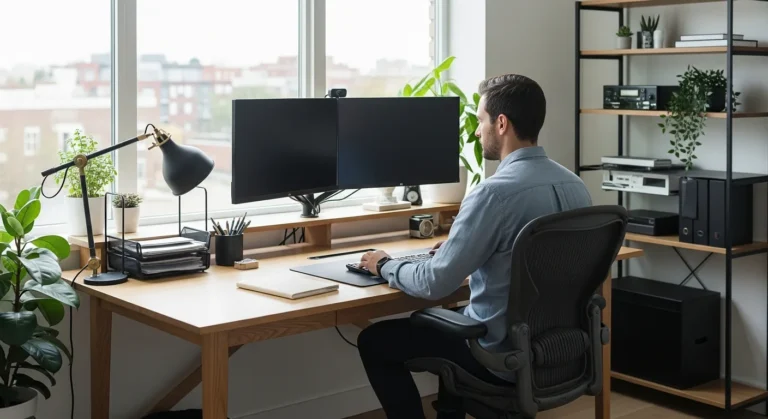
- Photos of his dedicated office space to prove exclusive use.
- Utility bills, property tax statements, and mortgage interest forms.
- Receipts for any furniture, tech hardware, or repairs.
- A log of his business hours if his home office is used for client meetings.
Frequently Asked Questions
Can I claim the home office deduction if I am a W-2 employee?
Generally, no. Under current tax laws for 2026, the home office deduction is primarily reserved for self-employed individuals, contractors, and business owners. W-2 employees who work remotely are typically unable to claim these expenses on their federal returns.
What happens if my business loses money this year?
A man cannot use the home office deduction to create a business loss. If his gross income is less than his total business expenses, the deduction for certain home office costs may be limited, but he can often carry those unused deductions forward to the next tax year.
Does a “dedicated space” have to be a separate room?
Not necessarily. While a separate room with a door is ideal, a clearly defined area within a larger room can qualify as long as it is used exclusively for business. He should use a partition or a distinct layout to show that the space is not used for personal activities.