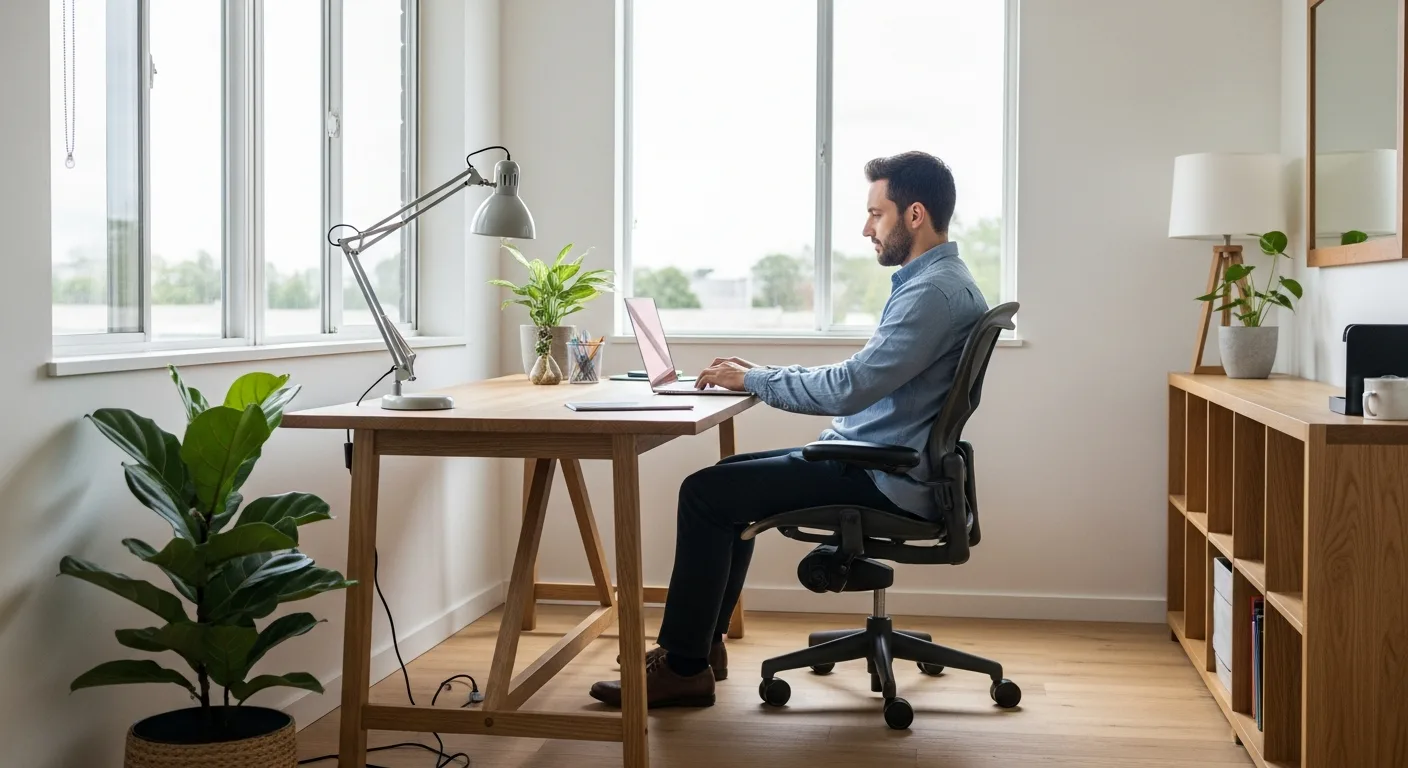
How to Choose the Best Work From Home Desk for Peak Performance
Why Your Desk Choice Dictates Your Productivity
A man’s workspace is more than just a surface for his laptop; it is the foundation of his daily output. If he spends eight hours a day hunched over a kitchen table, his focus will inevitably crumble alongside his posture. The right work from home desk acts as a command center, allowing him to organize his tools, manage his time, and maintain the physical stamina required for high-level professional tasks.
Investing in a dedicated desk isn’t about aesthetics alone. It is about creating a psychological boundary between his personal life and his professional responsibilities. When he sits down at a well-chosen desk, his brain receives a signal that it is time to perform. This mental shift is essential for anyone looking to sustain long-term success in a remote environment.
The Ergonomic Essentials for the Modern Professional
Ergonomics should never be an afterthought. A desk that is too high causes shoulder tension, while one that is too low leads to chronic back pain. To find his ideal height, a man should be able to sit with his feet flat on the floor and his elbows at a 90-degree angle while typing. This alignment prevents repetitive strain injuries and keeps him energized throughout the afternoon slump.
- Adjustable Height: Look for desks that allow for micro-adjustments to match his specific torso length.
- Surface Depth: Ensure there is enough room to keep the monitor at least 20 inches from his eyes to reduce strain.
- Legroom: Avoid desks with bulky drawers that prevent him from stretching his legs or shifting positions.
When considering different home office desk ideas, he should prioritize surface area and legroom to ensure he doesn’t feel cramped during intense deep-work sessions.
Standing Desks vs. Traditional Seated Options
The debate between standing and sitting has shifted toward a middle ground: the sit-stand desk. For the man who values his health, a motorized standing desk offers the flexibility to change positions every hour. This movement boosts blood flow and can significantly improve cognitive function. Standing while taking a high-stakes phone call often helps him project more authority and energy in his voice.
However, traditional desks still hold value, especially for those who require heavy storage or a more permanent, solid feel. For those in leadership roles, an executive desk for home office setups can provide the necessary authority and storage space to manage complex projects without cluttering his visual field.
Maximizing Space with L-Shaped and Corner Desks
If he is working with a limited footprint, an L-shaped desk is a strategic choice. It utilizes corner space that would otherwise go to waste and provides two distinct zones: one for his primary computer work and another for analog tasks like signing documents or reviewing blueprints. This physical separation of tasks helps him stay organized and prevents his primary keyboard area from becoming a graveyard for loose papers.
Key benefits of L-shaped configurations:
- Multi-Monitor Support: Plenty of room for three or more screens without crowding.
- Reachability: Everything he needs is within an arm’s length, minimizing the need to get up and break his flow.
- Professional Appearance: These desks often look more substantial and established in a dedicated room.
Material and Build Quality: Choosing for Longevity
A cheap particle-board desk will eventually sag under the weight of a heavy monitor arm or a desktop PC. He should look for solid wood, high-grade plywood, or reinforced steel frames. A sturdy desk doesn’t wobble when he types aggressively or leans in to focus on a spreadsheet. Stability is a silent contributor to a professional’s peace of mind.
Surface texture also matters. A smooth, matte finish is often better than glass, as it reduces glare from overhead lights and feels warmer to the touch during early morning starts. If he uses a mouse without a pad, a high-quality wood or laminate surface will provide the best tracking and durability over years of use.
Frequently Asked Questions
How wide should a work from home desk be?
For most men, a width of 48 to 60 inches is the sweet spot. This provides enough room for a laptop, an external monitor, and a notebook without feeling overwhelmed by empty space.
Is a standing desk worth the extra cost?
Yes, if he finds himself feeling lethargic or experiencing lower back pain. The ability to transition to standing for 15-20 minutes every hour can drastically improve his long-term health and daily focus.
What is the best way to manage cables on a desk?
He should look for desks with built-in grommets or under-desk cable trays. Keeping wires out of sight reduces visual clutter, which has been shown to lower stress levels and improve concentration.
Should the desk face a window?
While natural light is beneficial, facing a window directly can cause eye strain due to glare. It is often better for him to place the desk perpendicular to the window, allowing light to hit the workspace from the side.