How Do You Start a Landscaping Business and Scale to Six Figures in 2026?
Defining Your Landscaping Niche
Starting a landscaping business is one of the most reliable ways for a man to build a high-margin service company from the ground up. However, the biggest mistake a new entrepreneur makes is trying to be everything to everyone. He must decide early on whether he will focus on routine maintenance (mowing, edging, blowing) or design-build projects (hardscaping, irrigation, and planting).
Maintenance provides steady, recurring cash flow, which is the lifeblood of any service business. On the other hand, specialized projects like installing stone patios or complex drainage systems allow him to charge premium rates for his expertise. In 2026, the demand for sustainable and drought-resistant landscaping is surging, offering a lucrative path for those who specialize in eco-friendly designs.
Legal Foundations and Business Structure
Before he fires up a single mower, he needs to protect his personal assets. Operating as a sole proprietorship is risky in a field involving heavy machinery and physical labor. Registering an LLC (Limited Liability Company) is the standard move for a professional landscaper. This structure ensures that if a mishap occurs on a job site, his personal savings and home remain shielded from business liabilities.
Insurance is non-negotiable. At a minimum, he requires general liability insurance to cover property damage or bodily injury. If he plans to hire a crew, workers’ compensation is mandatory in most states. He should also look into an inland marine policy, which covers his equipment while it is in transit between job sites—a detail many beginners overlook until a trailer theft occurs.
Essential Equipment for the Modern Landscaper
A man’s efficiency in the field is directly tied to the quality of his tools. While it is tempting to buy residential-grade gear to save money, commercial-grade equipment is built to run eight hours a day, every day. He should prioritize the following:
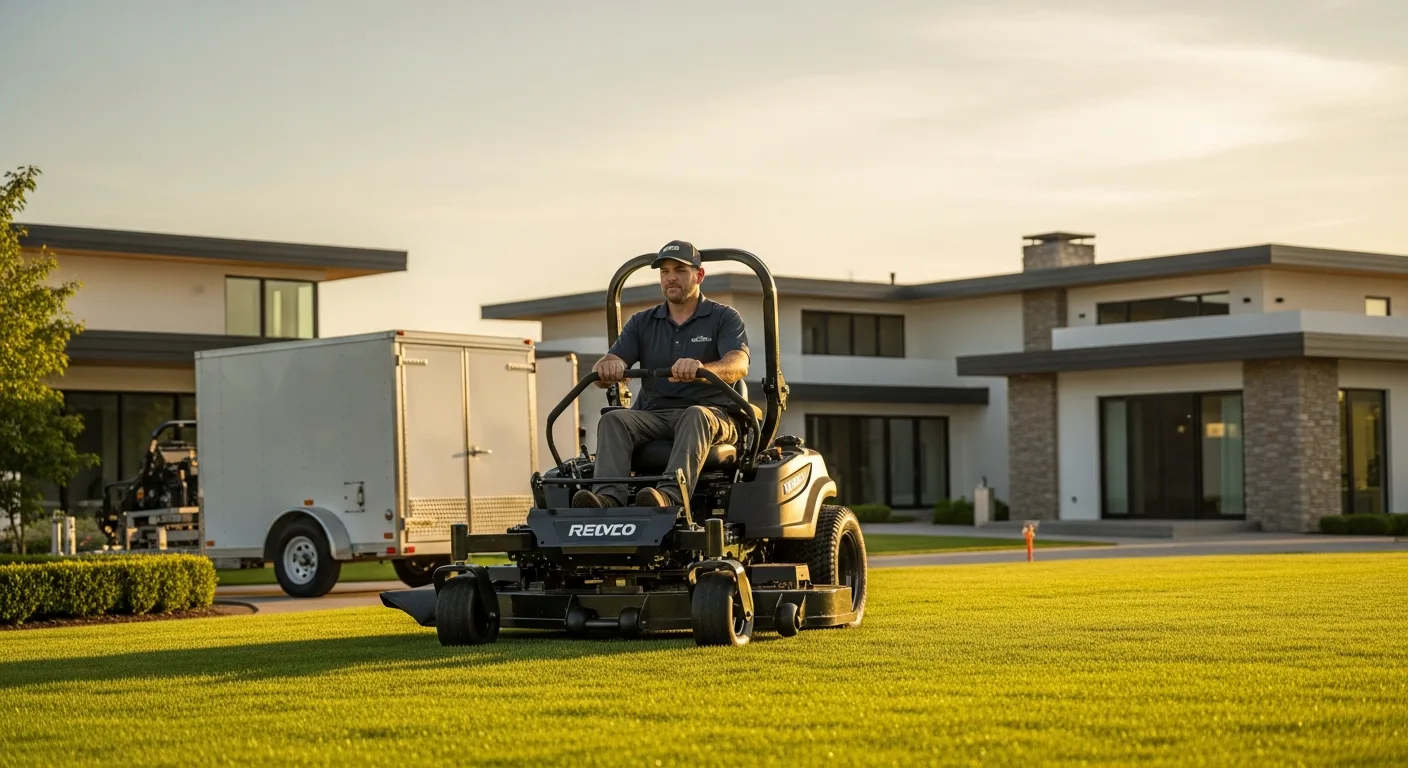
- Zero-Turn Mower: Essential for speed and precision on larger residential lots.
- Commercial String Trimmer and Blower: These are the workhorses that provide the finished look clients pay for.
- Reliable Truck and Trailer: His mobile headquarters must be capable of hauling heavy loads without constant mechanical failure.
As the business grows, managing the books becomes as important as managing the lawn. Hiring a specialized accountant for small business operations can help him track depreciation on his equipment and maximize tax deductions, ensuring he keeps more of his hard-earned profit.
Marketing Strategies That Actually Get Leads
In the landscaping world, local density is the key to profitability. If he spends half his day driving between jobs, he is losing money. He needs to dominate specific neighborhoods to minimize travel time. A highly effective, old-school tactic that still works in 2026 is the use of physical marketing materials. Distributing door hangers for business promotion in high-end subdivisions allows him to target specific streets where he already has a presence.
Digital presence is equally vital. He should claim his Google Business Profile and aggressively pursue five-star reviews. When a homeowner searches for “landscaping near me,” he needs to appear in the top three results. High-quality photos of his completed projects act as a visual portfolio, proving his skill before he even speaks to a potential client.
Managing Finances and Scaling Operations
Profitability in landscaping is won or lost in the bidding process. He must know his overhead recovery move—exactly how much it costs him to operate per hour, including fuel, insurance, and labor. If he bids too low, he is essentially paying to work. If he bids too high, he loses the contract.
To scale, he must eventually step away from the mower and into the role of a manager. This involves creating Standard Operating Procedures (SOPs) for his crew. Whether it is how to edge a driveway or how to interact with a customer, having a set system ensures that the quality of work remains high even when he isn’t on-site. This transition from operator to owner is what separates a side hustle from a legitimate landscaping empire.
Frequently Asked Questions
How much does it cost to start a landscaping business?
A basic startup can cost between $5,000 and $15,000. This covers a used commercial mower, basic hand tools, a trailer, and initial insurance and licensing fees. He can start smaller with residential gear, but he will likely need to upgrade quickly as his client list grows.
Do I need a license to do landscaping?
Requirements vary by state and the type of work performed. General lawn maintenance often only requires a basic business license. However, specialized work like pesticide application, irrigation installation, or large-scale construction usually requires specific professional certifications.
Is landscaping a profitable business in 2026?
Yes, it remains highly profitable because it is a service that cannot be automated or outsourced overseas. With the rise of high-end residential developments, homeowners are increasingly willing to pay a premium for professional outdoor management and curb appeal enhancement.